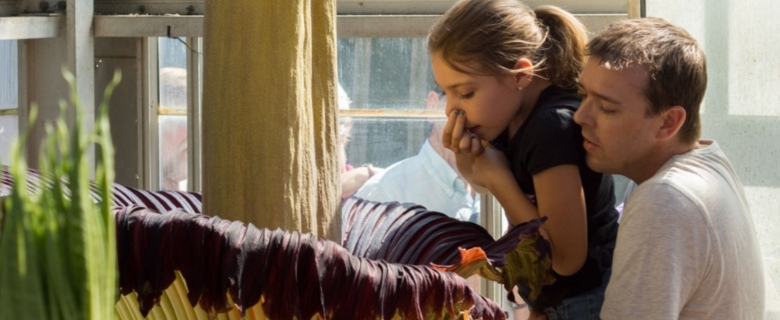
Around ten years after the first seeds were donated to the Botanic Gardens of South Australia, the first flower sprouted its stinky spadix in 2015.
Since then, a further 19 blooms have grown - that's 20 in a decade!
We have displayed six of these to the public. The remaining blooms have been used for research and propagation purposes.
You can see some of them through time lapse footage here:
2016 - Ganteng, Bicentennial Conservatory, Adelaide Botanic Garden
2017 - Ganteng + a leaf! Bicentennial Conservatory, Adelaide Botanic Garden
2021 - Mount Lofty Botanic Garden nursery
23-25 January 2026
Affectionately named by staff as Smellanie, the latest corpse flower to be put on display in Adelaide Botanic Garden drew around 7,000 thousand visitors keen to experience this rare botanical phenomenon, despite an extreme heatwave.
Renowned for its towering size, pungent aroma and fleeting appearance, the rare Sumatran plant releases a distinctive scent often likened to rotting flesh.
The powerful odour peaks within the first 24 hours of flowering as the plant attracts pollinators, lasting for up to 48 hours. After this brief display, the striking yellow spadix begins to collapse.
Horticultural Curator at the Botanic Gardens and State Herbarium of South Australia (BGSH), Matt Coulter, said the bloom represents a significant milestone in a plant conservation journey that began two decades ago.
“We received a donation of three seeds in 2006, and from that small starting point have grown a collection of around 250 Titan Arum plants,” Mr Coulter said.
“Approximately 100 have been propagated from leaf cuttings and 150 through cross-pollination, in addition to the original three plants. This bloom has emerged from a tuber generated by one of those original seeds and marks the second time this particular plant has flowered, following its last bloom in 2021.”
Also known as the Titan Arum and Amorphophallus titanum, the bloom reached a top of 2.13 metres tall, and highlighted the importance of long-term plant conservation efforts. Titan Arums are listed as endangered on the IUCN Red List, with fewer than 1,000 plants remaining in the wild.
Habitat loss from deforestation for palm oil plantations, illegal logging, theft and climate change continues to threaten the species, making the ex-situ conservation role of botanic gardens increasingly critical.
BGSH Director Michael Harvey said plant conservation is central to the organisation’s mission.
“BGSH works closely with botanic gardens and conservation-focused institutions across Australia and internationally to protect both Australian and exotic plant species,” Mr Harvey said.
“In the case of the Titan Arum, our horticultural experts have shared tubers, DNA samples, propagation techniques and research to help safeguard this remarkable species.”
“The growth of this collection, and the enjoyment it brings to the public, is a testament to the skill, dedication and expertise of our team.”
Timelapse video of Smellanie below.
