
The Botanic Gardens and State Herbarium Library is South Australia’s leading botanical reference source. It holds an extraordinarily rich collection of more than 40,000 items including books and rare books, journals, reprints, microfiche, photographs, maps, plans, letters, memorabilia, oral histories and other archival material.
A valuable resource for staff on site, anyone who has a genuine interest can access the collection by making an appointment. Scientists, students, historians, horticulturalists, and artists have all taken a deep dive into our stacks!
You can contact our library by calling +61 (8) 8222 9325 or emailing DEW.BGLibrary@sa.gov.au
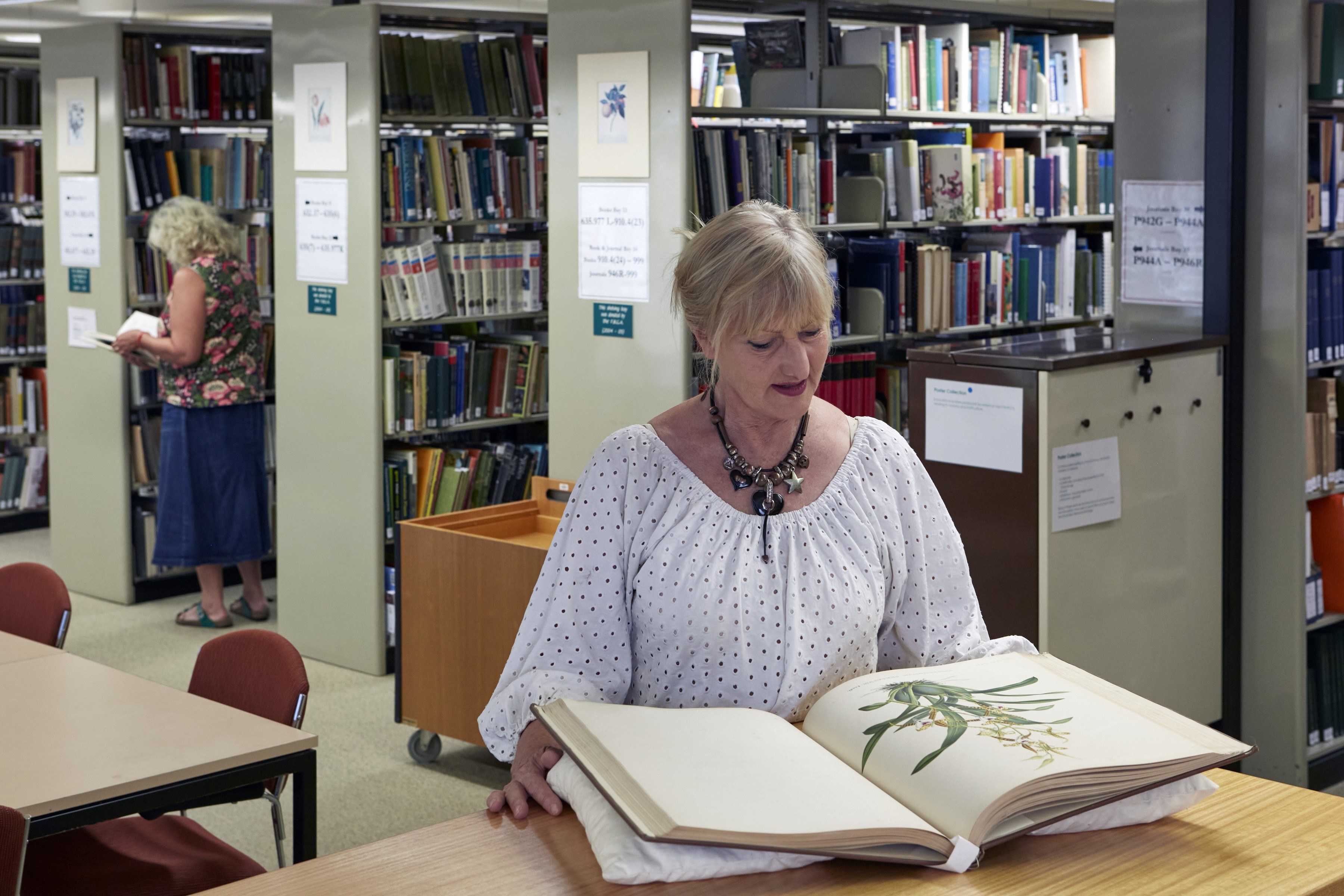
Across its 150-year history, the Library has acquired material through gift, purchase, and exchange. Its oldest work is a 1516 Greek herbal by Pedanius Dioscorides. The Rare Book collection includes lush, hand-illustrated volumes from 19th‑century European plant hunters, including Joseph Hooker’s Rhododendrons of Sikkim and the grand folio Victoria Regia, depicting the Amazon Waterlily. The Library also holds a complete run of the world’s oldest botanical journal— Curtis’ Botanic Magazine—from 1787 onward.
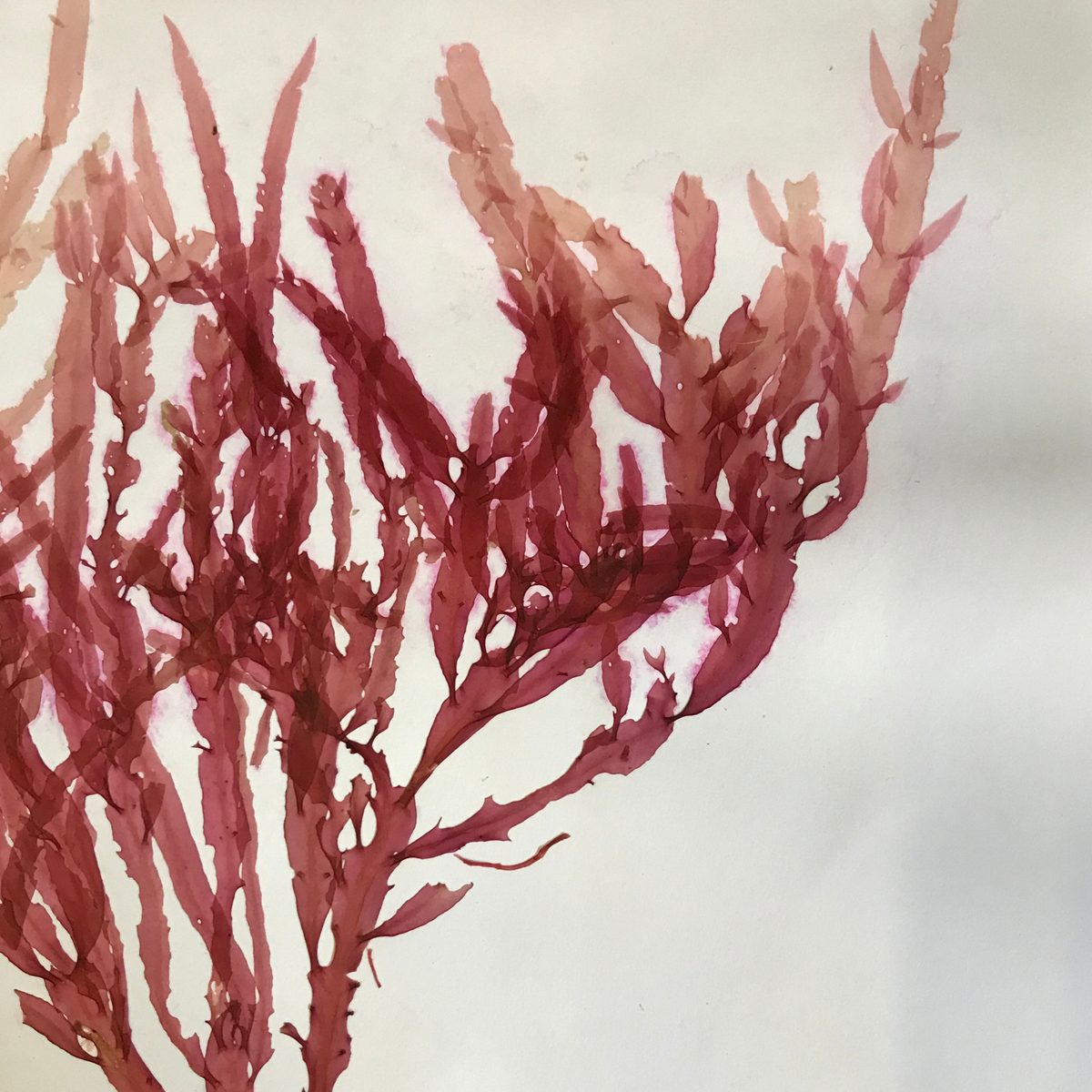
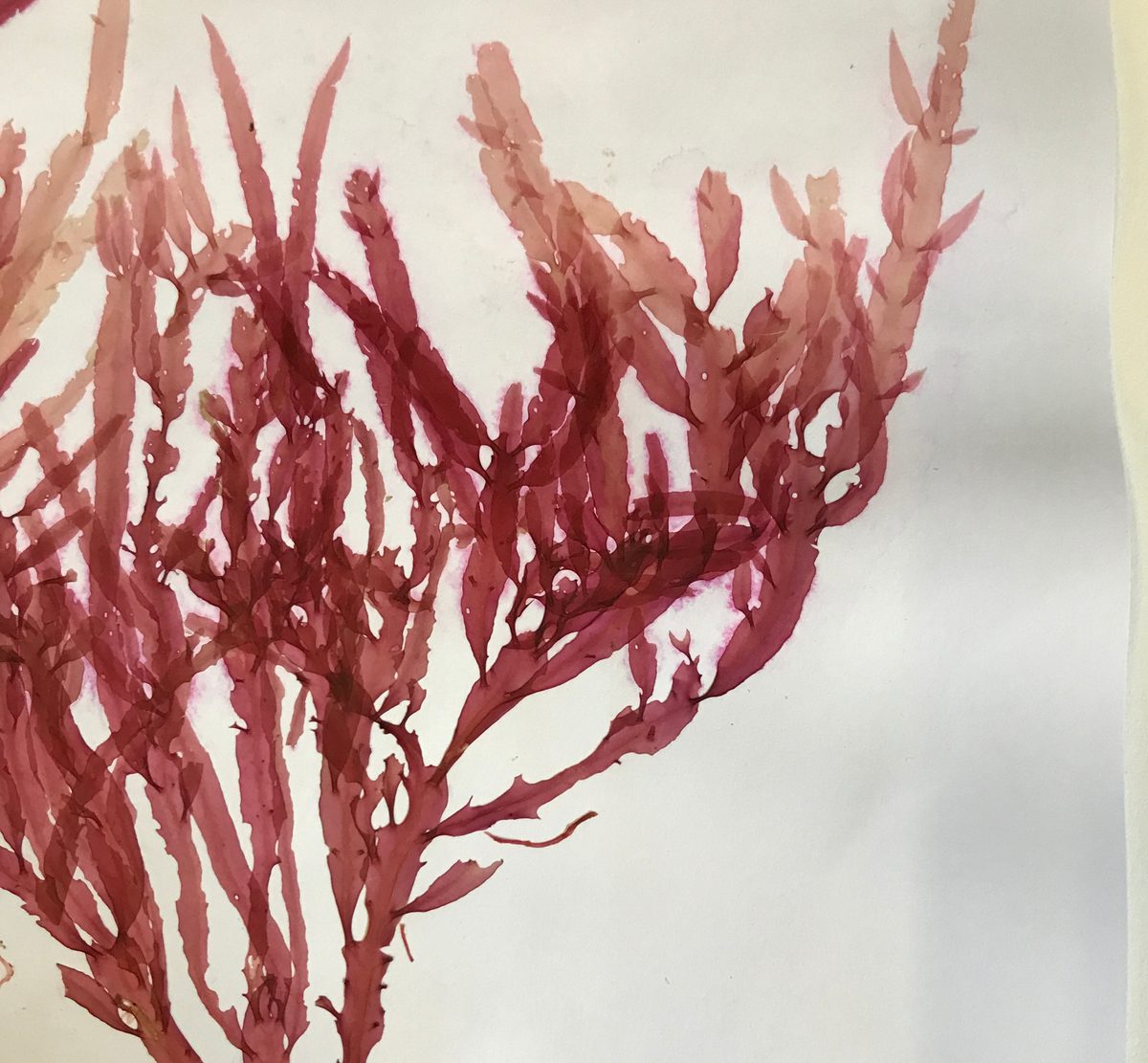
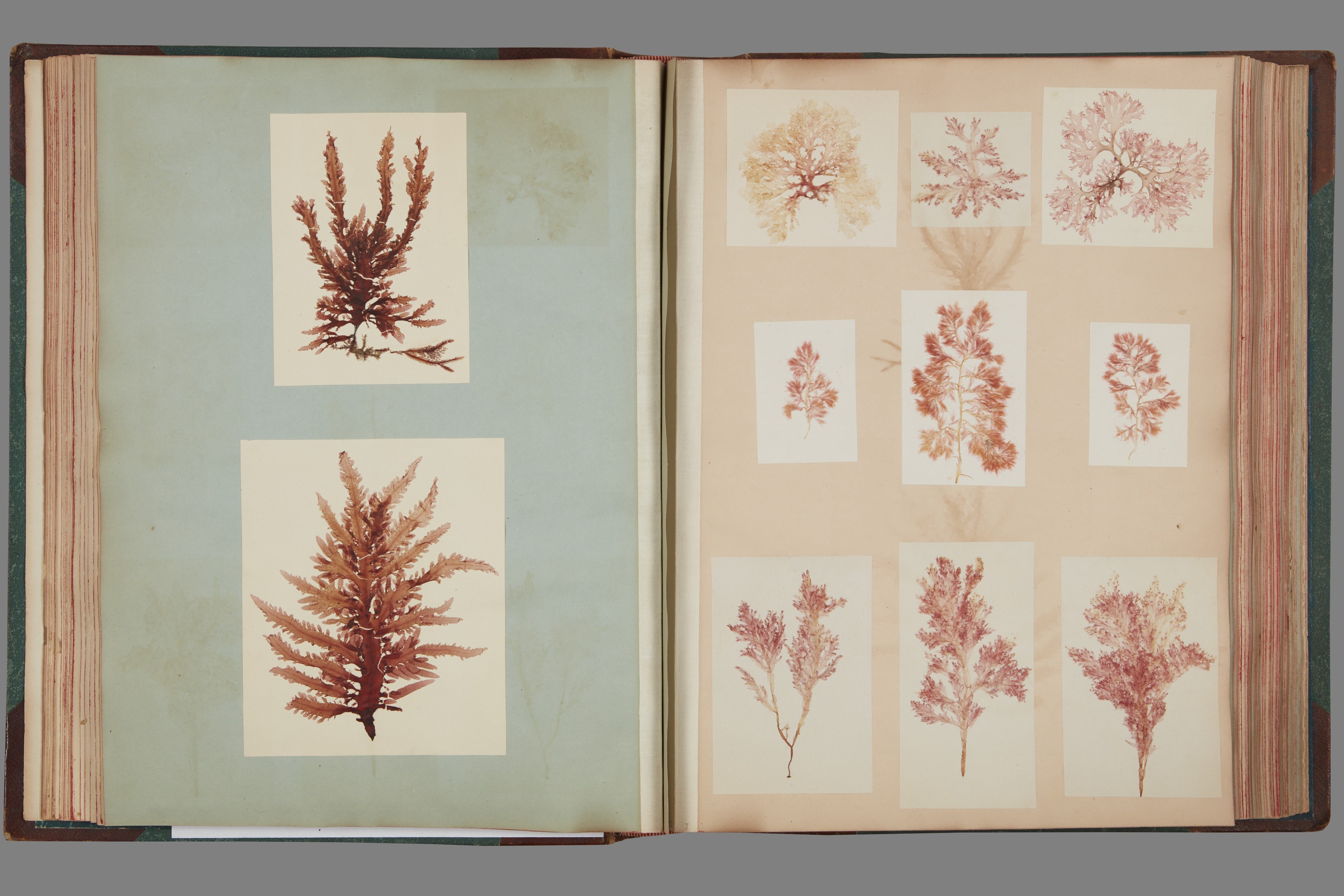
More humble but no less exquisite are local publications by Fanny de Mole who arrived in the colony in 1857 and produced the first book capturing South Australia’s wildflowers, and Miss Simpson’s ‘flowers of the sea’ a stunning scrapbook of specimens of South Australian marine algae.
Our collections explore the colonial ambitions embedded in botanic gardens, celebrate First Nations scientific knowledge, and highlight ways in which botany holds solutions to some of our most pressing environmental and human challenges. Local publications, many by Herbarium scientists, reflect changing taxonomy and cutting-edge research into South Australia’s vascular plants, mosses, lichens, fungi and marine algae.
Our Archive provides a fascinating window into the transformation of the botanic gardens over time. Holdings include staff records, historic pay slips, photographs, slides, maps, plans, press clippings, artefacts, historic nursery catalogues, correspondence, postcards, and Board reports and minutes dating from 1855.
Digging into the archives reveals some curious gems. Lofty ambitions are a theme in the handwritten letters of the Garden’s first director George Francis. A 19th century acquisition list reveal that beyond plants, George accepted gifts of lemurs, monkeys, North American bears, tigers, kangaroos and possums to enrich his onsite menagerie. Public Regulations from 1856 warn that visitors who ‘detain gardeners by conversation and immoral conduct or language will be punished with the upmost severity of the law’, while press clippings from 1956 celebrate the first female horticultural trainee.
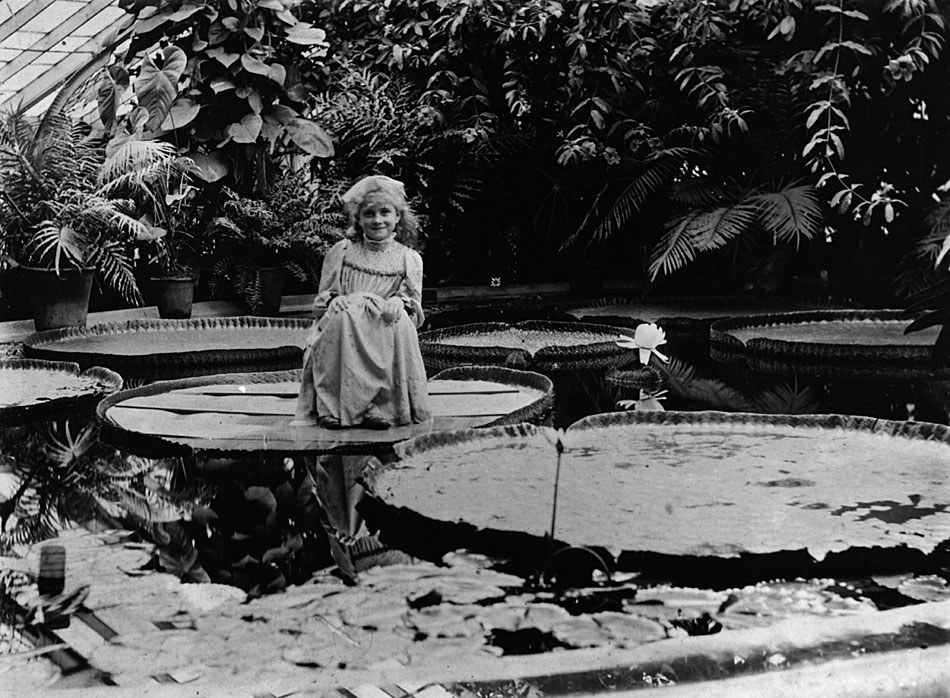
The Archives hold over 4000 historical images (most of them digitised) tracing the extraordinary ways each garden site has evolved – snapshots capturing Wardian cases lining garden paths, high tea taken on islands in Main Lake, and a young patron perched precariously on a waterlily pad.