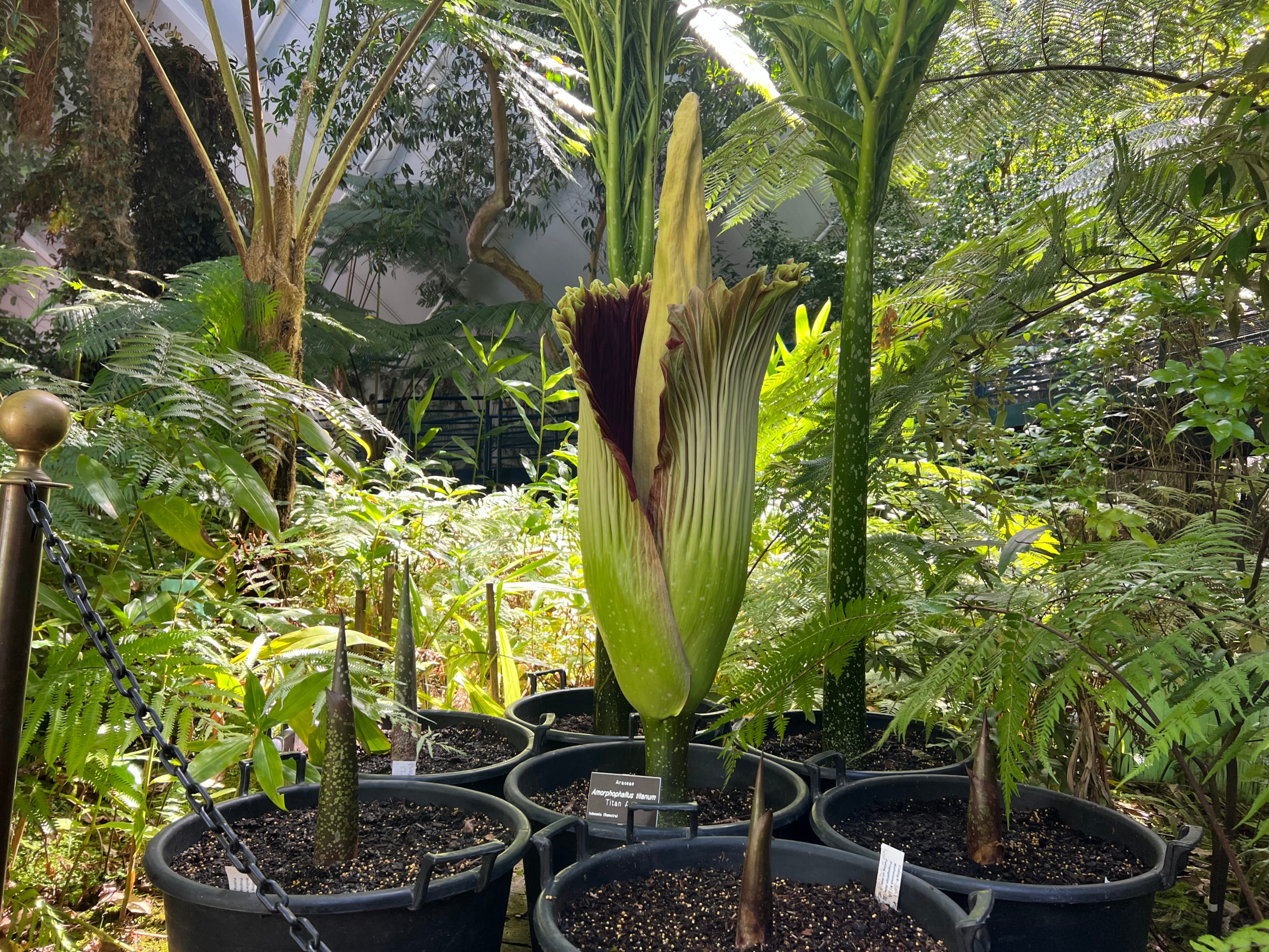
Before 2018, the International Union for the Conservation of Nature (IUCN) listed the species as vulnerable. It has become even rarer in the tropical rainforests of its native Sumatra and is now listed as endangered.
Threats include habitat loss through land clearing for palm oil, illegal logging, theft, and climate change.
Grown in over 90 botanic gardens worldwide, these rare giants face a hidden threat. Poor record keeping amongst gardens in the past had led to inbreeding, reducing genetic diversity. This can lead to plants producing less pollen, succumbing to disease, or even dying after blooming.
Scientists warn that without diverse genetics, rewilding efforts could fail.
To fight this, global gardens are borrowing techniques from zoos, creating ‘studbooks’ to map each plant’s DNA and prevent inbreeding. Since the fleshy tropical seeds can’t be stored, frozen pollen is now express couriered between gardens during blooms, giving the species a fighting chance to survive.
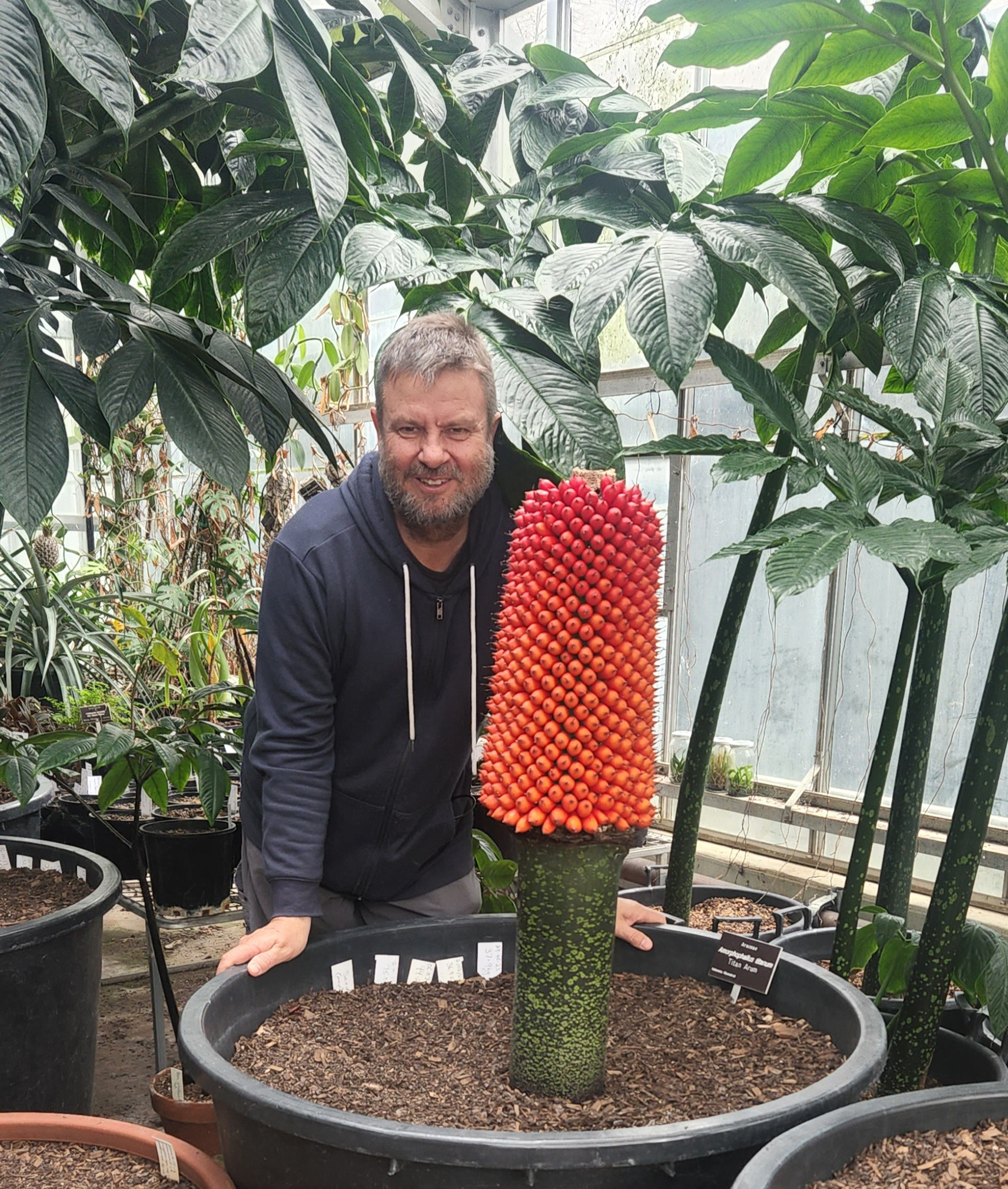
Matt Coulter with a Titan Arum in seed
Mount Lofty Botanic Garden's nursery is Australia's corpse flower 'mothership'.
Matt Coulter, the horticulturalist in charge of plant propagation at South Australia’s Botanic Gardens, is a world expert on Amorphophallus titanum.
From just three seeds donated to the Gardens in 2006, his team has grown about 250 plants. This includes around 100 plants grown from leaf cuttings and 150 through cross-pollination, in addition to the original three plants.
We work closely with botanic gardens and conservation-focused institutions across Australia and internationally to protect the Titan Arum, and Matt has shared tubers, DNA samples, propagation techniques and research with other gardens.
A six year old tuber from our collection led to the growth of a corpse flower - Putricia - which was displayed in Royal Botanic Gardens Sydney in 2025. Geelong Botanic Gardens has also received material from that lead to a bloom in 2024.
Mount Lofty’s Nursery – affectionately named ‘The Amorphophallus Palace’ – has Australia's largest collection of corpse flowers, and one of the largest in the world.
