 27 Feb 2026
-
8 Jun 2026
27 Feb 2026
-
8 Jun 2026
 10:00
-
16:00
10:00
-
16:00
 Free Entry
 Open daily
In a free exhibition running as part of the Adelaide Festival, Yield Strength reveals how materials, selfhood and society are tested - and transformed - under pressure.
The exhibition features 24 artists who push and reshape their mediums to create rich, layered experiences across the Art Gallery of South Australia, Samstag Museum of Art and in two locations within Adelaide Botanic Garden - the Museum of Economic Botany, and the Bicentennial Conservatory.
Free entry, open daily 10am - 4pm. Map reference D4
Archie Moore - Remnants Of My Father
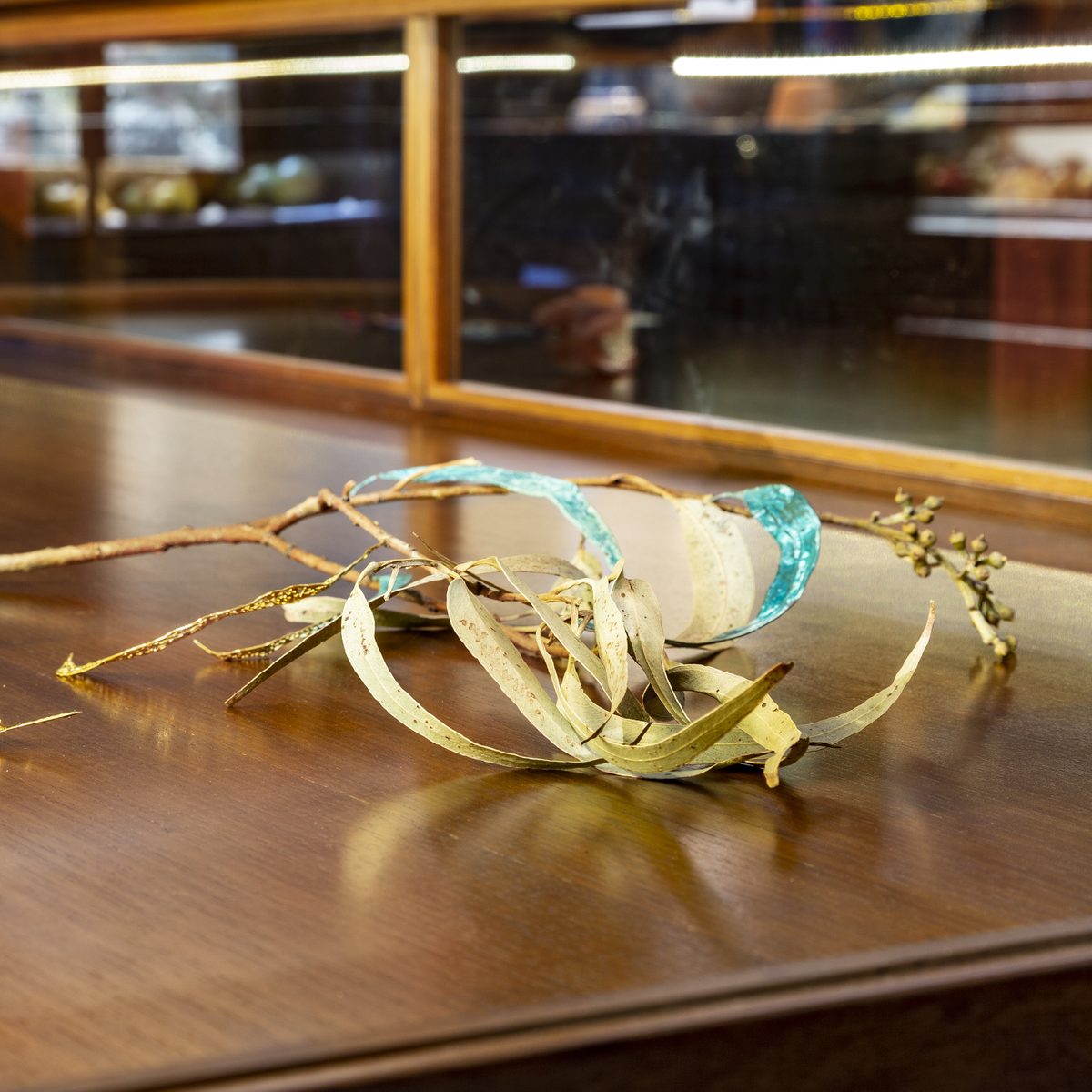
In Remnants Of My Father, Archie Moore creates a portrait of his father, Stanley Moore (1908–1994).
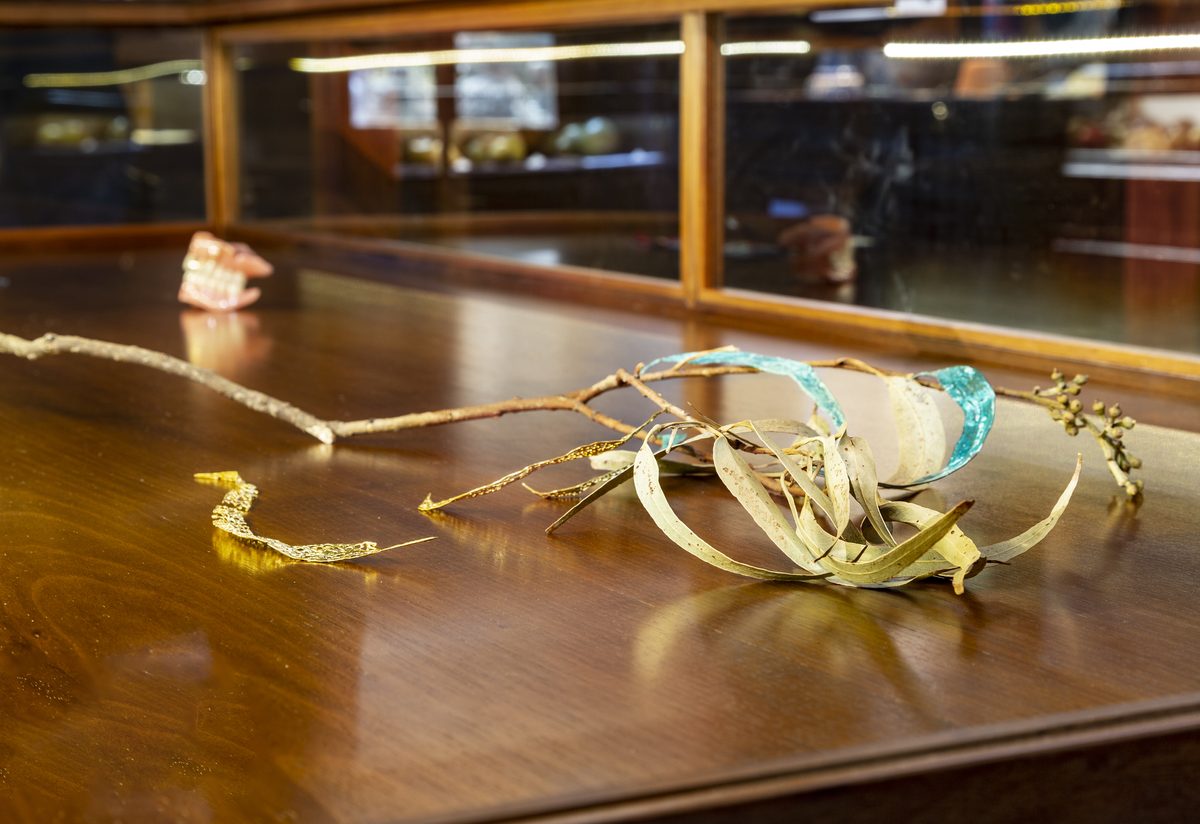
Rather than standing face to face with his father’s likeness, audiences understand Stanley through the objects and papers he left behind: a hand-drawn map of a gold deposit, a licence to possess minerals, a business advertisement, war medals, a bedside bucket, and dentures with a gold cap.
The artist remembers his father reassuring the family that they would not remain poor since he knew of a gold deposit that would change their fortunes. Working as a earth mover and a borer, Stanley never struck it rich before he died of prostate cancer. Archie has realised his father’s dream by working with the highly revered metal to create this work of art.
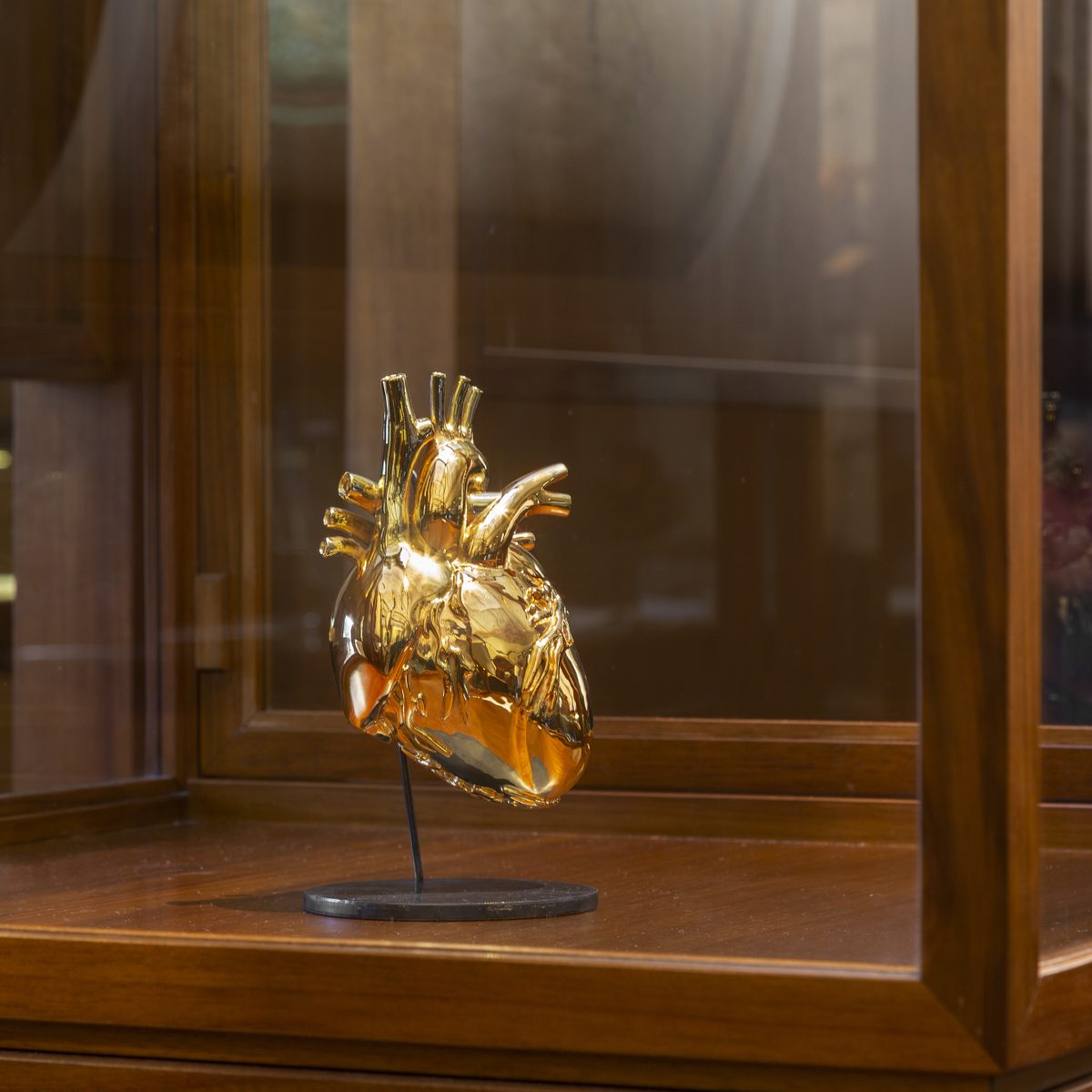
In addition to Stanley’s possessions, Archie has included a heart of gold and a piece of pyrite. ‘Heart of gold’ was an expression people used to describe Stanley. Archie wonders whether they were using it to label Stanley as kind or naive. Pyrite is commonly known as ‘fool’s gold’ since its glimmer gives prospectors false hope. By including pyrite alongside Stanley’s archive, Archie demonstrates how the allure of gold can make fools of us all.
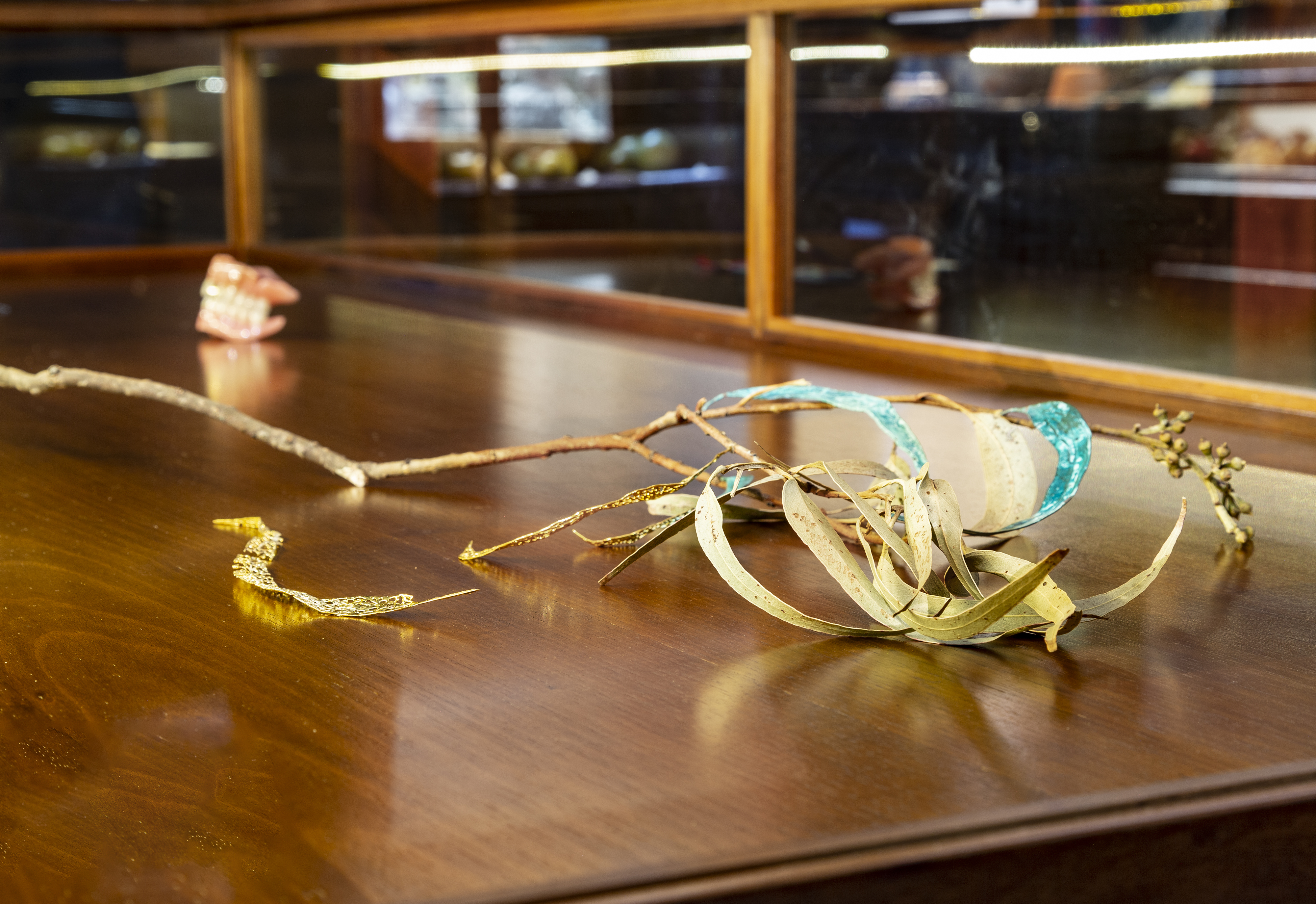
Installation view: 2026 Adelaide Biennial of Australian Art: Yield Strength, featuring Remnants Of My Father by Archie Moore, Museum of Economic Botany, Adelaide, photo: Saul Steed
Free entry, open daily 10am - 4pm. Map reference C5
Robert Andrew - Country, Ground, Earth, Space, Time
Robert Andrew seeks to convey the long span of geological time in his works of art. A reminder of how the surface of the earth has been shaped over four and a half billions of years and how humans are only a small part of that vast timescale.
For Country, Ground, Earth, Space, Time, a motor slowly pulls on a rope that has been imbedded into the towers of soil causing the surface to crack and crumble to reveal the layers of sand, silt, clay, oxides and ochre. Through this act of destruction a new landscapes is created each day.
While humans have made a rapid impact during their time on the planet — filling the world with skyscraper-filled cities — in another four and half billion years the current built environment and the people who inhabit it will have returned to the earth.
Andrew has included oxides and ochres as these materials have cultural significance in First Nations ceremony and art. By mixing oxides and ochres in the soil stacks Country, Ground, Earth, Space, Time, the artist conveys that while markers of Country may at times be hidden they remain present and will reveal themselves again in due course.
Erika Scott - Infill Panoramas
Erika Scott’s practice draws inspiration from horror and science fiction films.
For Infill Panoramas, the artist was inspired by Adelaide Botanic Garden’s Bicentenary Conservatory, which is the largest single-span conservatory in the Southern Hemisphere. Its glass-and-steel structure conjures the failed Biosphere 2 experiment, in which scientists tested the possibility of living within a self-sustaining habitat that was driven by ambitions to colonise the Moon and other planets.
Scott fills clear cylinders — resembling test tubes — with nostalgic household objects, superfluous items that might be missed when living in a scientific experiment. In a nod to surrealist art and science fiction cinema, Scott also includes objects such as a melting clock and a toy hand of the superhero Hulk, suggesting that something is amiss and that trouble may be brewing within these strange, self-contained worlds.
The artist also fills the tubes with dirt so they resemble drilled core samples that are often referred to as 'vertical time capsules’. Core samples are used to study geological time and climate history. Infill Panoramas looks like something scientists will dig up thousands of years from now. Rather than the rare tools and jewellery found from the stone and bronze ages, future historians will be uncovering masses of plastic objects in various states of decay.
Fri 5 Jun 2026
3.30pm - 7pm
Ticketed event
Hear more about key works in the 2026 Adelaide Biennial of Australian Art: Yield Strength across all three venues through these exclusive in-conversation style talks with Exhibition Curator, Ellie Buttrose, Manager Interpretation and Cultural Collections, Botanic Gardens and State Herbarium, Lindl Lawton and Senior Curator of Samstag Museum of Art, Gillian Brown.

