Smellanie the corpse flower now in bloom at Adelaide Botanic Garden
Standing at 2.13metres tall, “Smellanie” the corpse flower has begun its rare and pungent bloom at Adelaide Botanic Garden.
Over the next 24 hours, the deep crimson outer layer will unfurl, the towering central spadix will release a powerful stench and the tiny male and female flowers at its base will burst into bloom. Within just two days, the distinctive odour will have faded, and the impressive structure will start to collapse.
Also known as the Titan Arum (Amorphophallus titanum), this remarkable and endangered plant is expected to attract thousands of visitors to the city oasis for its short-lived yet extraordinary display.
Those unable to visit the Garden or keen to see the bloom unfurl in real time can watch the botanical event via a live stream.
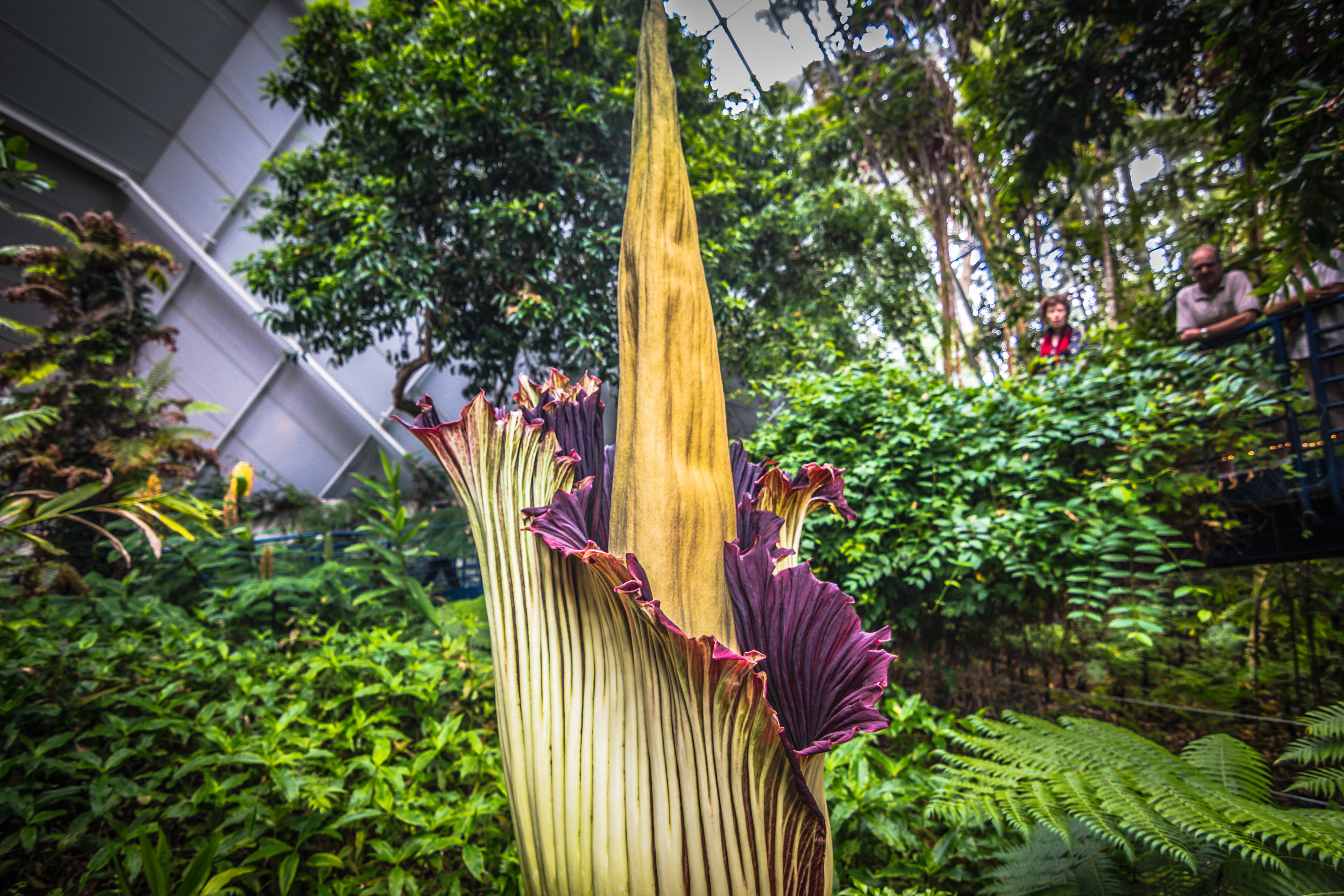
Smellanie sprouted from one of three original seeds donated to the Botanic Gardens 20 years ago and is flowering for only the second time, following its debut in 2021.
Following two decades of efforts, South Australia’s Botanic Gardens now holds the largest collection of the species in Australia. The Garden’s Horticultural Curator Matt Coulter said conserving the species poses significant challenges.
“The Titan Arum takes years to store enough energy to produce a bloom of this size — sometimes up to a decade,” Mr Coulter said.
“Once it does, it may flower every three to five years. Because the bloom lasts just 48 hours, pollination opportunities are limited and often require a lot of luck and teamwork.”
In the wild, insects are attracted to the smell and pollinate the flowers. Once seeds have formed, Rhinoceros hornbill birds eat and disperse the seeds. In cultivation, horticulturists must rely on careful timing.
“If two plants bloom a day or two apart, we can hand-pollinate. We have produced 150 new plants for our collection this way.
“In the near future, we hope to find a way to share pollen with other botanic gardens across the world— a vital step to maintaining genetic diversity,” Mr Coulter said.
Listed as endangered on the IUCN Red List, fewer than 1,000 Titan Arums remain in the wild, making natural cross-pollination increasingly unlikely. Habitat loss, illegal logging, and climate change continue to threaten the species, highlighting the critical role of botanic gardens in global conservation efforts.
Botanic Gardens and State Herbarium Director Michael Harvey said the bloom offers a powerful reminder of nature’s wonder.
“Conserving plants and sharing botanical stories is at the heart of what we do. This extraordinary species inspires awe and excitement thanks to the unique adaptations it has developed to survive.”
“We hope that coming to the Garden helps people to appreciate the vital role that all plants have in our ecosystems and to human life.”
“I’d like to recognise the efforts of all the Garden’s team, who have been working very hard both on the care and conservation of the flower and on rapidly putting together a fantastic display for the public” Mr Harvey said.
Visitors can see Smellanie on display at Adelaide Botanic Garden for two days before the bloom event comes to a natural end.
When can people see the bloom?
Friday 23 January: 7.30pm - midnight
Saturday 24 January: 7.30am – midday, and 7pm – midnight. Closed from 12pm midday – 7pm due to extreme heat.
Visitors are asked to prepare for queues of up to 3 hours, and should be aware that the queue will close at 10pm on both nights.
Where is it on display?
It is in the Bicentennial Conservatory in Adelaide Botanic Garden.
Visitors are advised to come prepared for long queues and the very hot summer conditions.
How much will it cost to see it?
On the two bloom days, entry to the conservatory will be free.
However a suggested donation of $5 or $10 per adult helps support ongoing conservation work, and makes experiences like this possible.
Please note that the stunning Wildlife Photographer of the Year exhibition is currently on display inside this conservatory. Wildlife Photographer of the Year is a ticketed event, but we recognise the very high community interest in the Titan Arum so entry to the conservatory will be free from the beginning of the bloom event and the entire second day of the bloom.
How do I find out more?
Updates will be shared on our social media channels:
Read FAQ’s and find more information to plan your visit, or learn about the Corpse Flower here.

