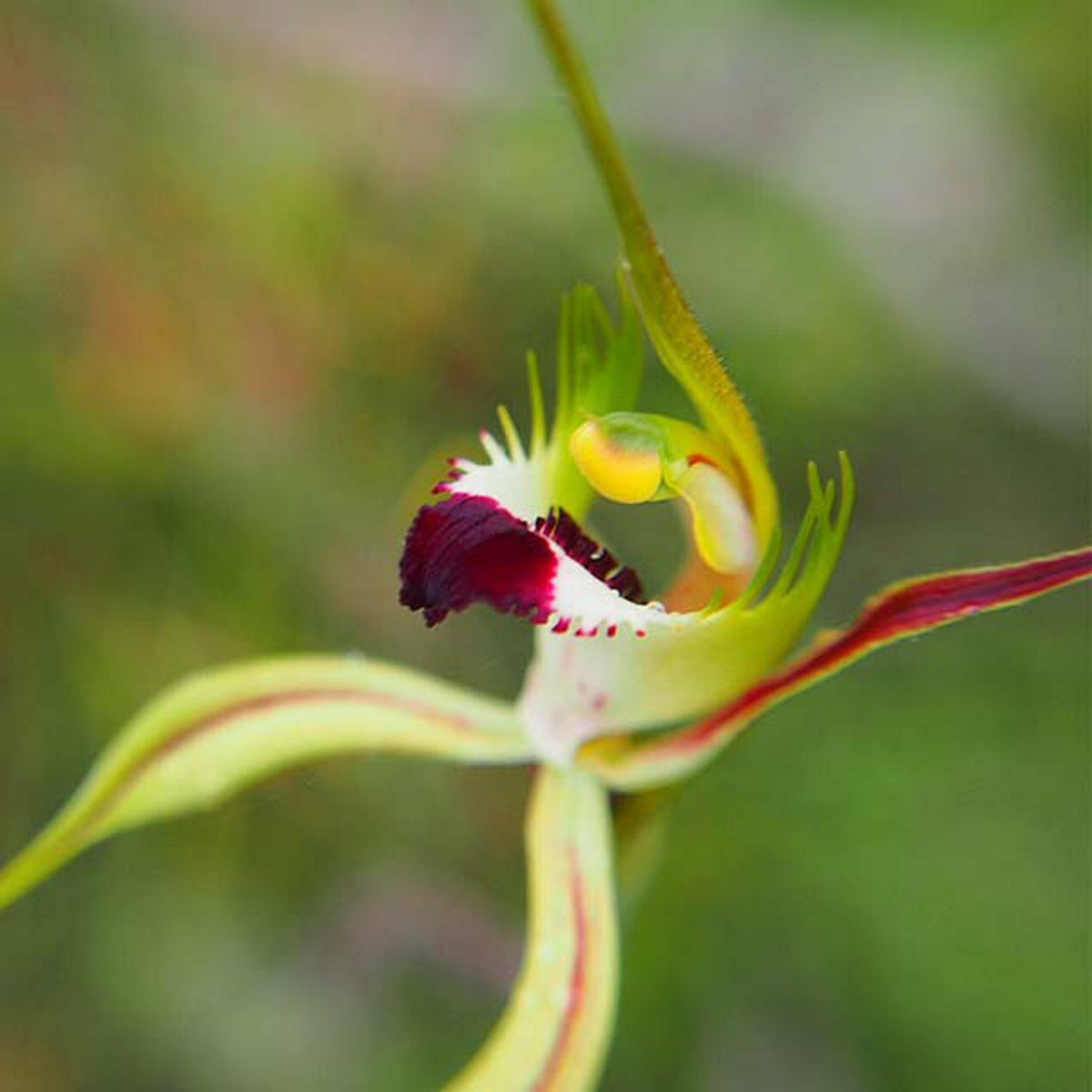
In April 2019, the Hackney Road entrance to Adelaide Botanic Garden was transformed into a unique display of South Australian plants, many of which are threatened in the wild.
The transformation was a number of years in the making. The staff wanted a special living collection at the entrance to the Garden that told the story of the vital work being done by scientists at the State Herbarium and the SA Seed Conservation Centre - research centres located in buildings facing Hackney Road.
The plants have been selected to exhibit flora collections sourced from the Flinders Ranges and South Australia’s outback arid lands which, over time, have developed special adaptations to cope with dry conditions. These plants are rarely seen outside of their natural range and most are not displayed in any other botanical collection in the world. It genuinely is one of a kind living collection.
Horticultural staff from the Botanic Gardens and State Herbarium created the landscape design and planting plan, and from there they worked with the institution’s scientists to create the new botanical living collection in a show of collaboration at its best.
The collection uses cuttings and seeds that were painstakingly harvested from wild plants in their natural habitat by scientists and horticulturalists, and tenderly propagated by Botanic Gardens specialist nursery staff. This work required developing new methods for propagating these species as most had never been grown outside of their natural environment.
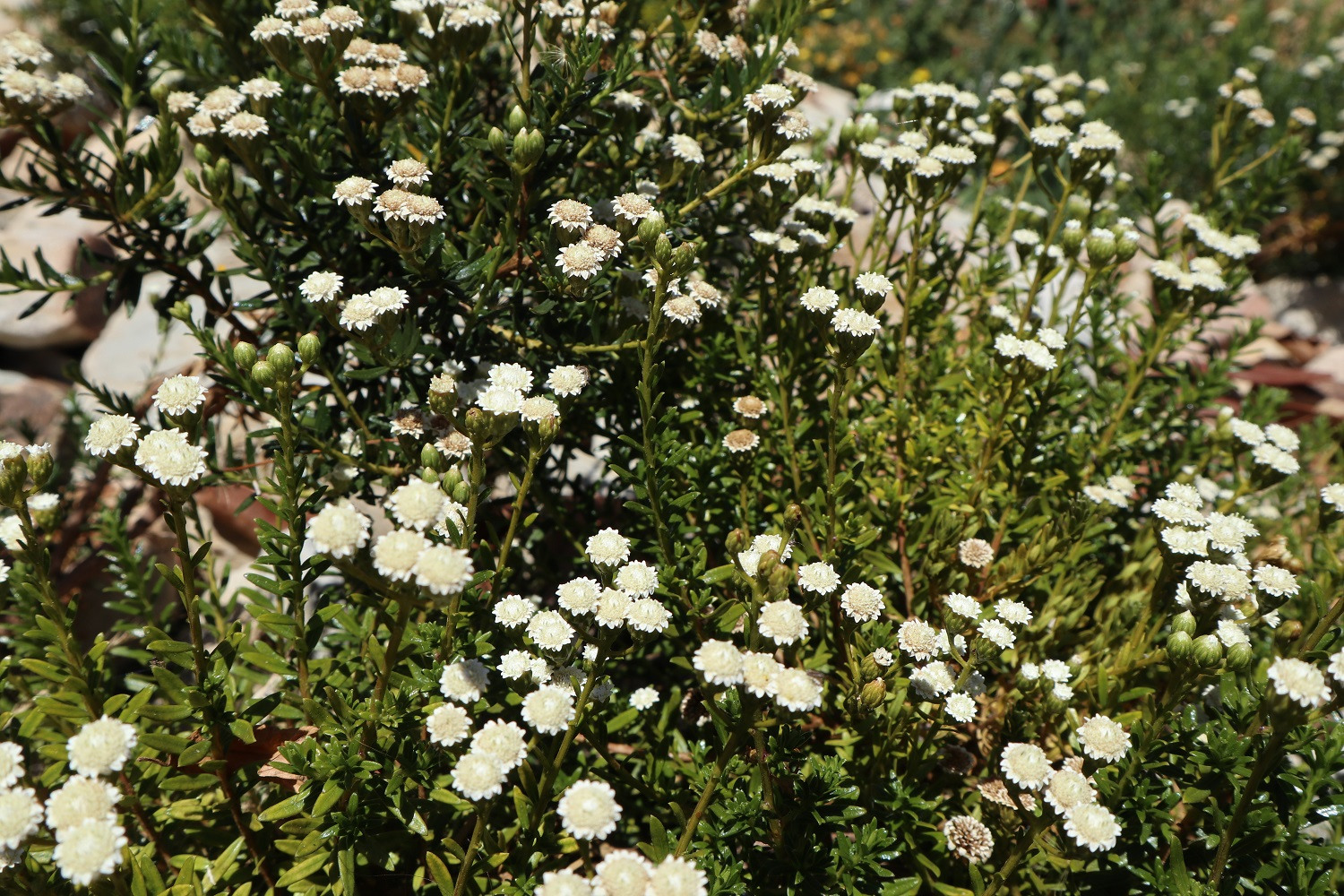
Ixodia flindersica
A team of horticultural staff worked hard to prepare the exposed area, including installing intricate irrigation and undertaking the meticulous placement of more than 30 tonnes of landscaping rocks, which recreate a microclimate for these niche plants and mirrors their natural landscape.
In a final concerted effort, Botanic Gardens and State Herbarium staff joined the horticultural team in planting the first seedlings in the newly prepared landscape.
In the near future, a new selection of rare and endangered native South Australian plants species will be planted to reflect the work being undertaken by the State Herbarium and fill the newly created habitat niches.
The State Herbarium’s botanists have identified - and where needed, named - many of these species. This refreshed living collection display will provide a window into the work of South Australia’s premier botanical institution.
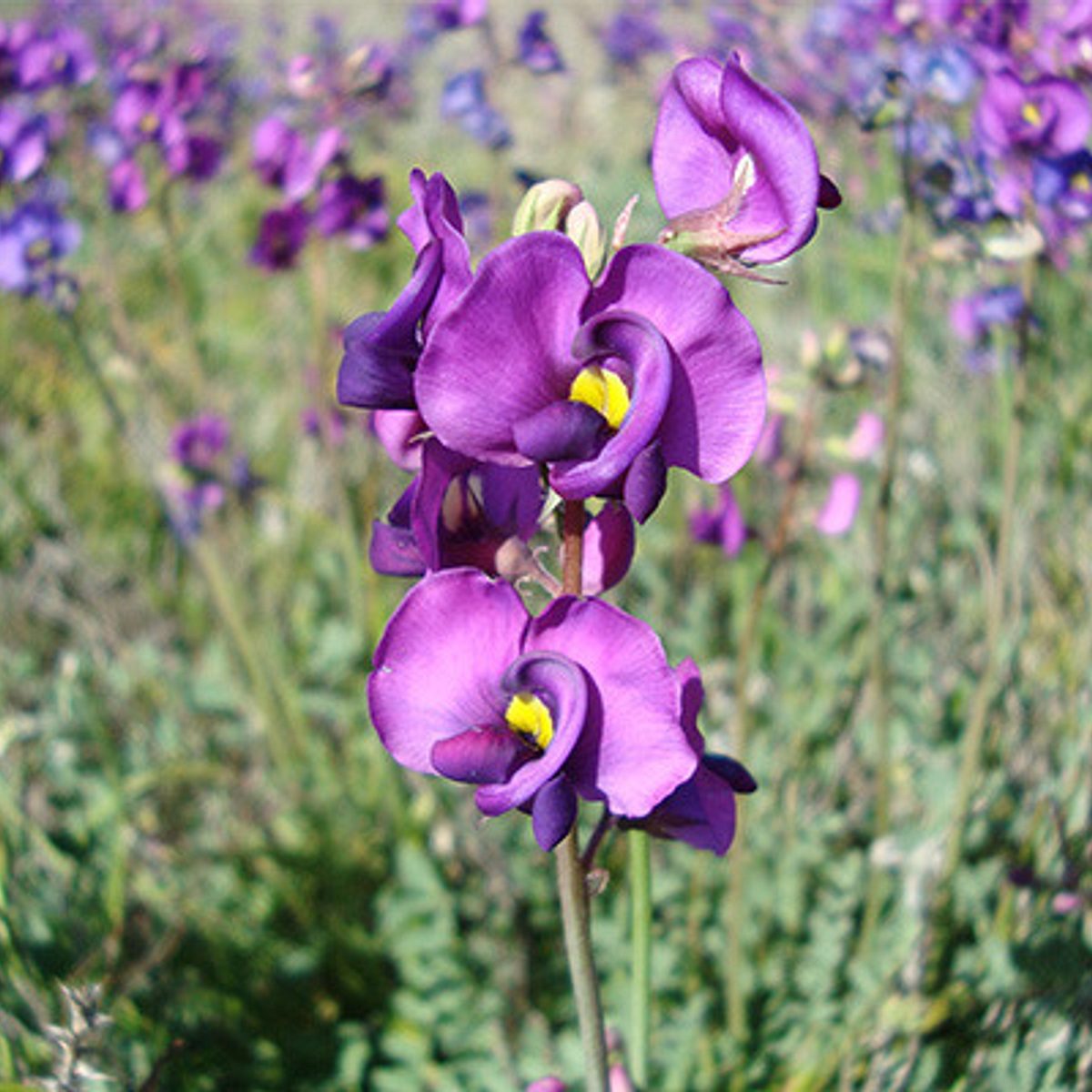
More than 100 different species are currently being showcased, including South Australia’s state floral emblem, the Sturt Desert Pea (Swainsona formosa) which is rare and near threatened in much of South Australia.
While the list of plants grown is too long to list here, some worth particular note are the critically endangered Xerothamnella parvifolia (Freckled duck), the rare Indigofera longibractea (Flinders Ranges Indigo) and the critically endangered Rhodanthe anthemoides (Chamomile sunray), which is Adelaide Botanic High School’s emblem.
Other plants in the display include Eucalyptus goniocalyx ssp. exposa (Long-leaf Box), which is listed as vulnerable and found only in the Flinders Ranges. It’s the same story for a number of Acacias, including Acacia araneosa (Balcanoona Wattle) renowned as being difficult to propagate, although this has been managed thanks to the expert skills of the Botanic Gardens.
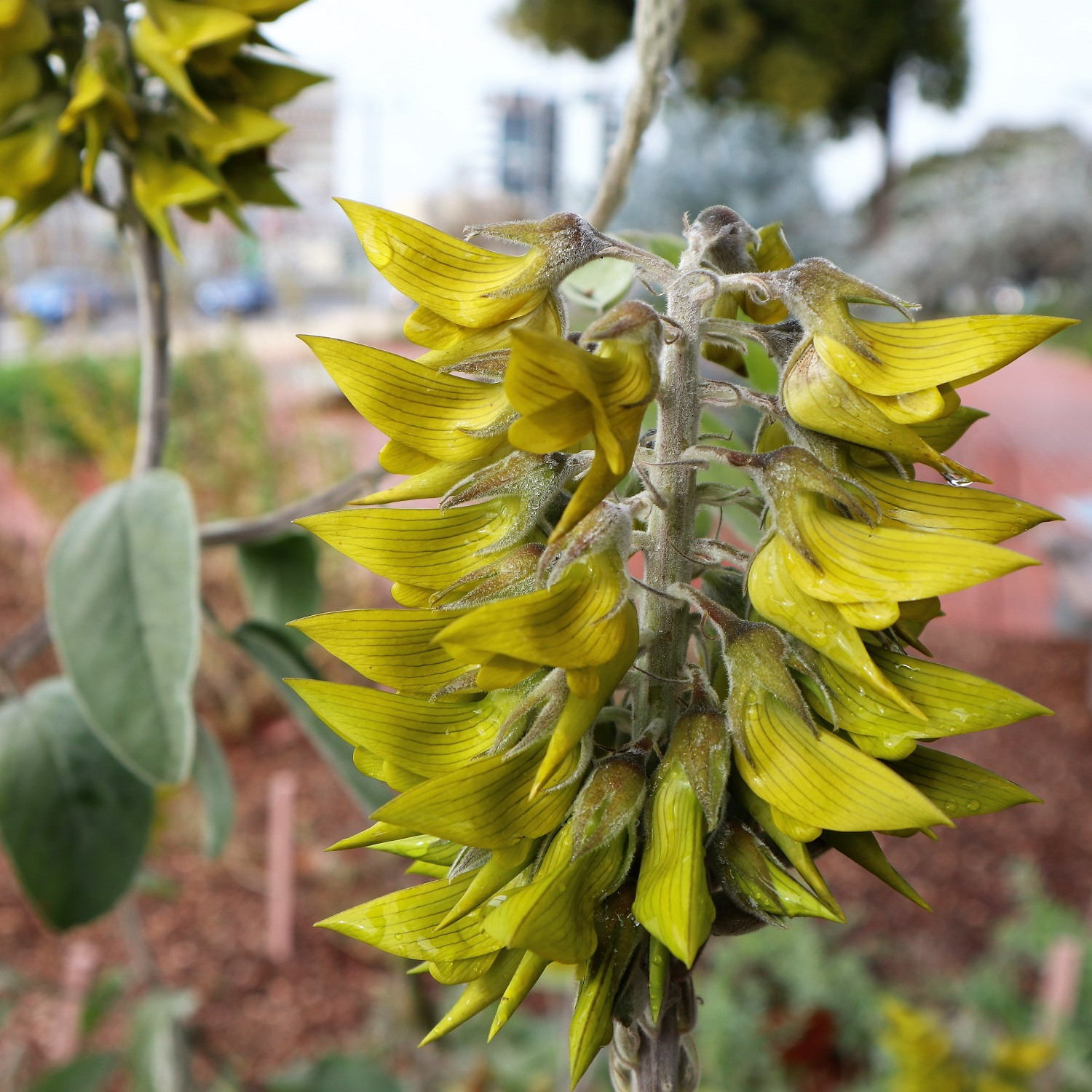
Crotalaria cunninghamii ssp. sturtii
Codonocarpus pyramidalis (Slender bell-fruit) has been planted, which is rare to endangered through parts of South Australia, and has been recorded in NSW but is now presumed extinct there.
The botanical displays have been designed to have a contemporary edge, but with an overall look that reflects the natural landscape. The circular beds bloom into a patchwork of seasonal colour while a canopy of mallee species provide welcome dappled shade at this entrance of Adelaide Botanic Garden.
Visitors are encouraged to get a glimpse of this unique plant collection, which they may not otherwise have the opportunity to see in the wild, and to witness real plant conservation in action.
